


An analysis of Gold intraday (XAU/USD) aimed at understanding market behavior and the role of informational tools in reading intraday price movements.
In intraday trading, Gold (XAU/USD) is one of the most closely observed—and at the same time most misunderstood—assets.
It is often described as “fast” or “unpredictable,” but these labels do little to explain its actual market behavior.
Reading Gold intraday correctly requires focusing on three fundamental elements: market movements, volatility, and operational context.
Without a structured reading of these factors, market observation risks turning into a sequence of isolated reactions.
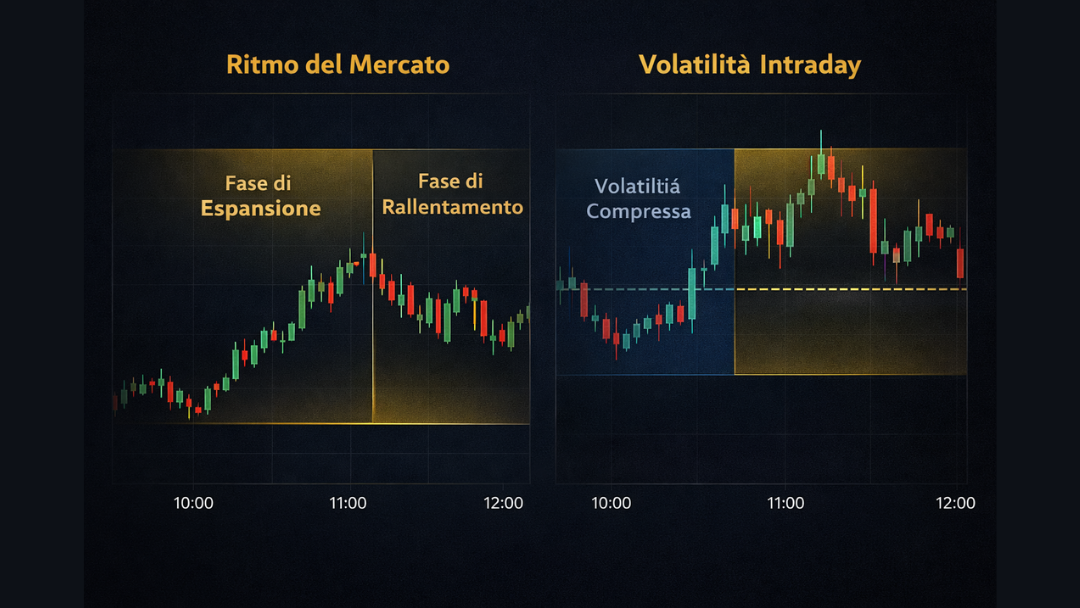
Rhythm and market movements in Gold intraday
Gold intraday does not move uniformly throughout the trading session.
It can alternate between phases of orderly movement and moments of sudden acceleration, without following a linear progression.
In this context, it is more useful to observe how price moves rather than trying to anticipate where it will go.
The rhythm of price movements provides information about the quality of the market at a given moment, not about future direction.
In intraday trading, market movements should be interpreted as contextual information, not as operational instructions.
Volatility and changes in intensity
Gold intraday volatility does not manifest solely through wide price swings.
Often, it is more relevant to observe the structure of the movement and how price transitions through different phases of the session.
Periods of compressed volatility may alternate with phases of higher intensity without automatically implying operational opportunities.
Without a structured reading, volatility is easily confused with urgency or directionality.
In Gold intraday, volatility gains meaning only when placed within a broader contextual framework.
Operational context before action
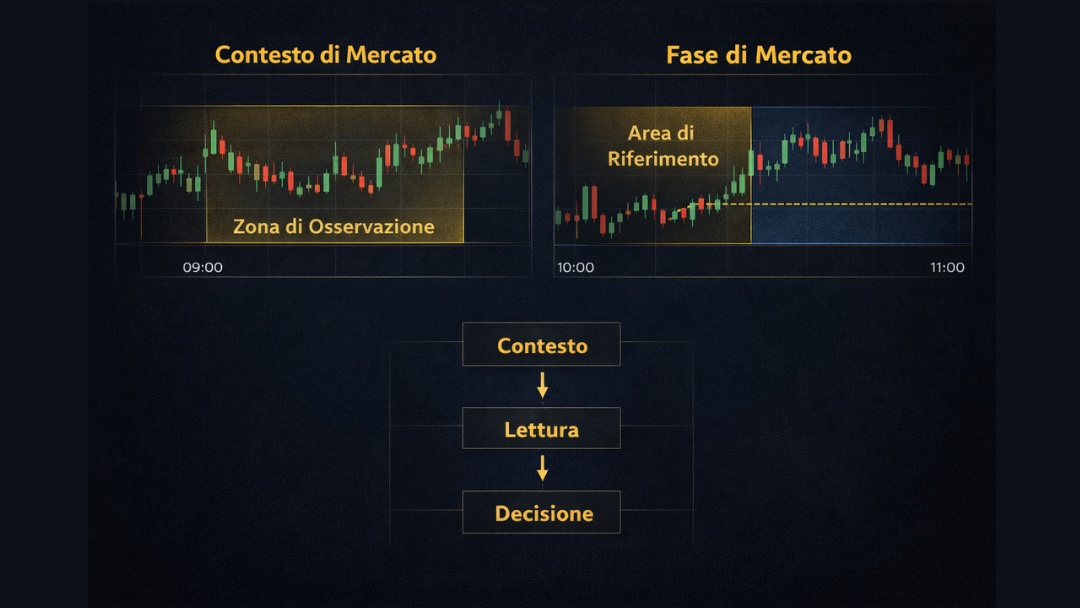
Consulting intraday references on the Gold market (XAU/USD)
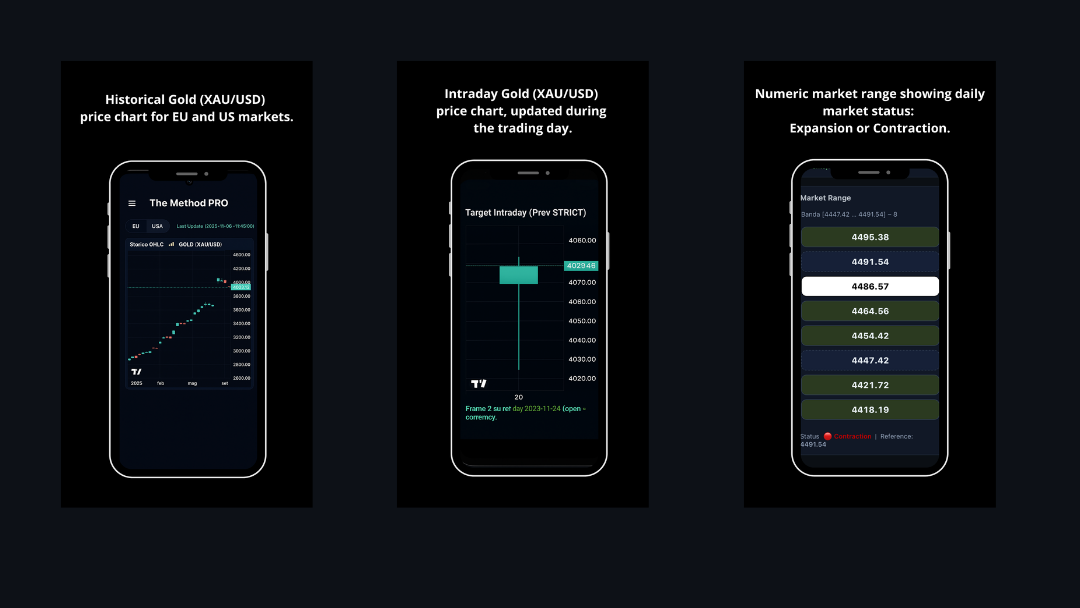
Within this framework, informational tools designed for the consultation of intraday references on the Gold market (XAU/USD) play a specific role.
Solutions such as WWG – Gold Intraday allow users to view levels calculated using the proprietary The Method Pro methodology, providing informational support based on data and the observation of intraday market movements.
Their purpose is not to indicate operational decisions, but to make the intraday context more readable, maintaining a coherent structure in market reading throughout the session.
Common errors in interpreting Gold intraday
FAQ Reference
For clarification on system usage, limitations, and common questions, please refer to the FAQ section.
Conclusion
Gold intraday requires attention to market movements, volatility, and the operational context in which these elements develop.
Informational consultation tools help organize data and make the market more readable during the intraday session.
Operational decisions, however, always remain the responsibility of the trader.
Note: The Method Pro is a market analysis and market-reading support software. It does not provide financial advice or trading instructions; all decisions remain the user’s responsibility.